Elysium
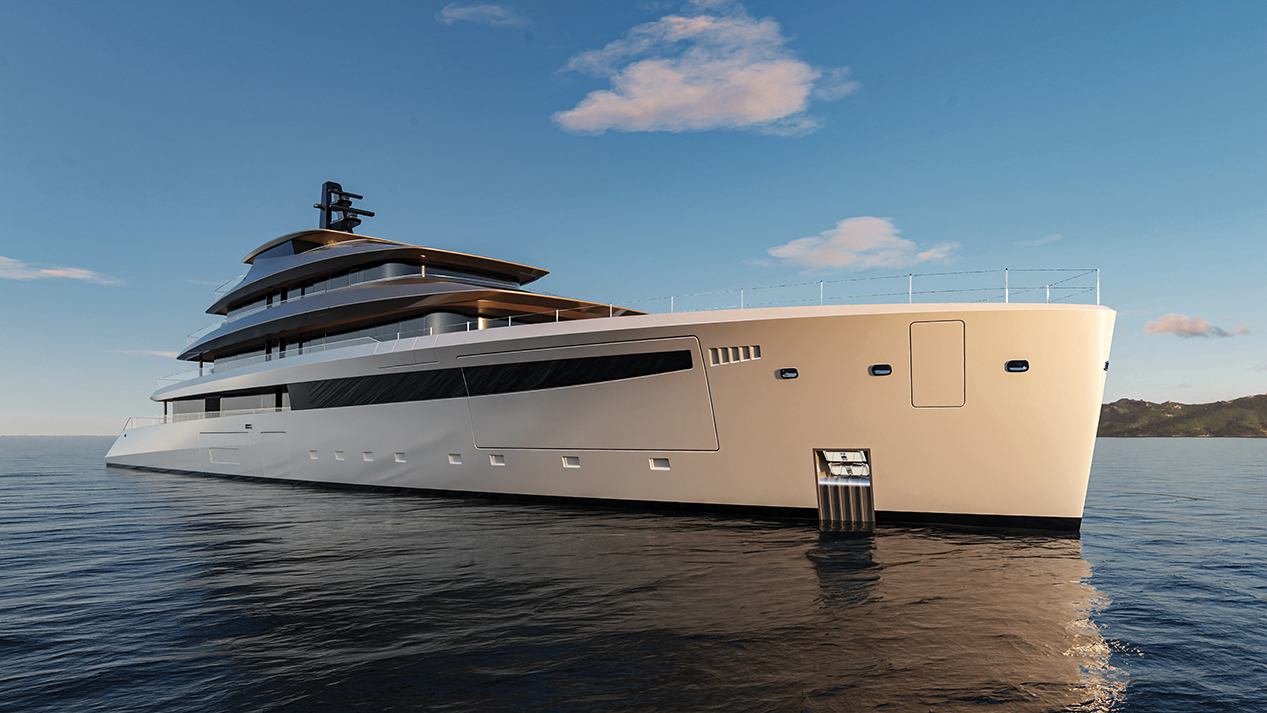
Oss, the Netherlands — In what may prove to be the most strategically important announcement of the year for the upper end of yacht building, Heesen Yachts has unveiled Heesen Project Ananda — a 72.3-metre hybrid steel flagship developed with Sinot Yacht Architecture & Design, and the largest steel superyacht the Dutch shipyard has ever committed to building.
The name, drawn from Sanskrit and meaning “inner joy”, is not decoration. It is the entire design brief. With a 100-square-metre wellness suite featuring a hyperbaric chamber, a snow shower, an ice bath, and a medical treatment room — all engineered alongside Heesen’s in-house Human Health Engineering department — Project Ananda is the first 70-metre-plus speculative build in recent memory to lead with wellbeing rather than spectacle. Keel laying is scheduled for November 2026, with delivery in 2030.
Key Takeaways
- Yacht: Project Ananda (YN 21872) — Heesen’s largest-ever steel superyacht.
- Dimensions: 72.3 m LOA / approx. 1,750 GT / five decks (Lower, Main, Owner’s, Bridge, Sun).
- Design: Exterior and interior by Sinot Yacht Architecture & Design; interior crafted entirely in-house by Heesen Interiors at Winterswijk.
- Propulsion: Hybrid — twin MTU 12V4000 M65L IMO Tier III engines (2×1,920 kW) with PTI/PTO gearboxes; four hours of fully silent cruising.
- Performance: 16 knots top speed / 5,000 nm range at 12 knots.
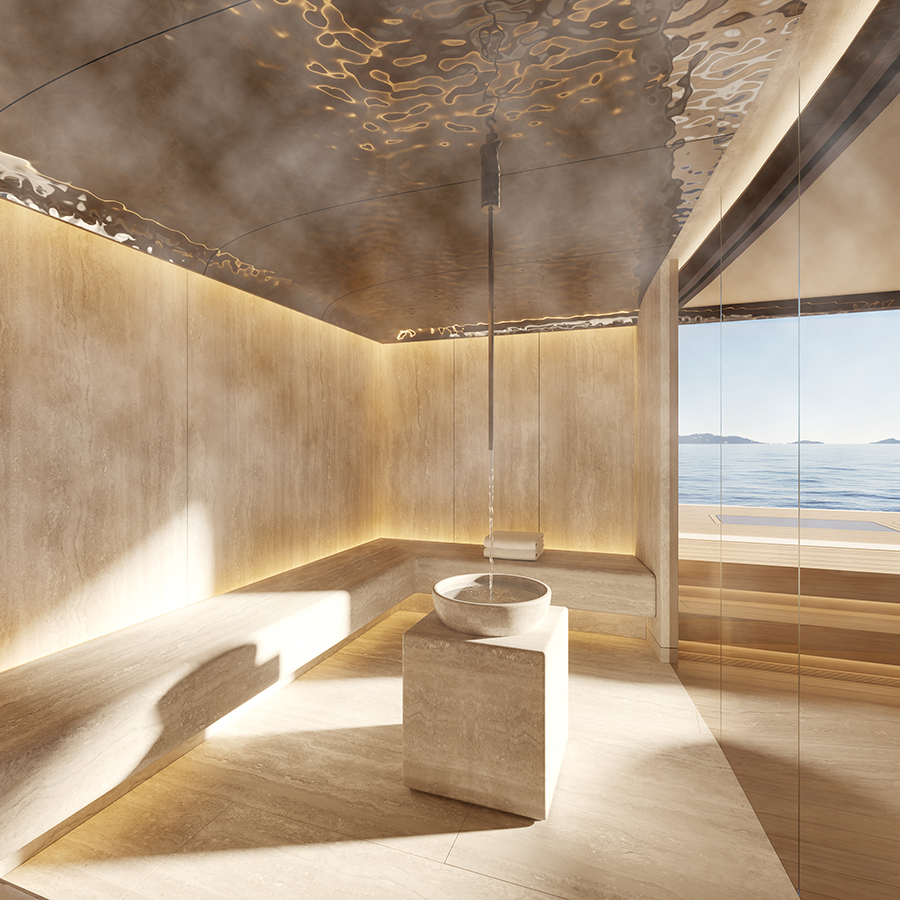
- Wellness: 100 m² midship spa — sauna, steam room, ice bath, snow shower, hyperbaric chamber, medical treatment room, bar.
- Platform: First build under Heesen’s new strategic direction — Smart Custom speculation build with extensive personalisation.
- Tank tested: University of Southampton’s Wolfson Unit.
- Estimated value: US $150–190 million.
- Timeline: Keel laying November 2026 → launch and delivery 2030.
Heesen’s New Strategic Direction, in One Yacht
Project Ananda is not merely Heesen’s largest steel project to date — surpassing the recently delivered Sparta by a clear margin. It is also the first physical expression of what the yard is calling its new strategic direction: a productised approach in which a fixed, optimised hull and engineering envelope is paired with a configurable superstructure and interior package. Heesen calls it the Smart Custom platform.
The commercial logic is sharp. Traditional custom builds at this size lock the buyer into 60+ month build cycles and exposed cost structures. Pure series builds, conversely, sacrifice the personalisation that defines genuine ultra-luxury yacht ownership. Smart Custom resolves the tension by freezing the parts that benefit most from engineering optimisation — hull form, naval architecture, propulsion — and leaving everything that touches lifestyle (Owner’s Deck arrangement, interior, deck-use, wellness configuration) genuinely open.
That Heesen is committing capital to a 72.3-metre speculative build under this model is the strongest possible vote of confidence the yard could make in the new playbook.
The Sinot Collaboration: Sleek Profile, Softer Soul
Sinot Yacht Architecture & Design — the studio behind some of the most quietly consequential superyacht and residential designs of the past decade — has been brought in for the full exterior and interior, an unusual depth of engagement for a Heesen speculative project. The collaboration began at the earliest design stage, allowing the exterior styling to evolve in lockstep with naval architecture and engineering.
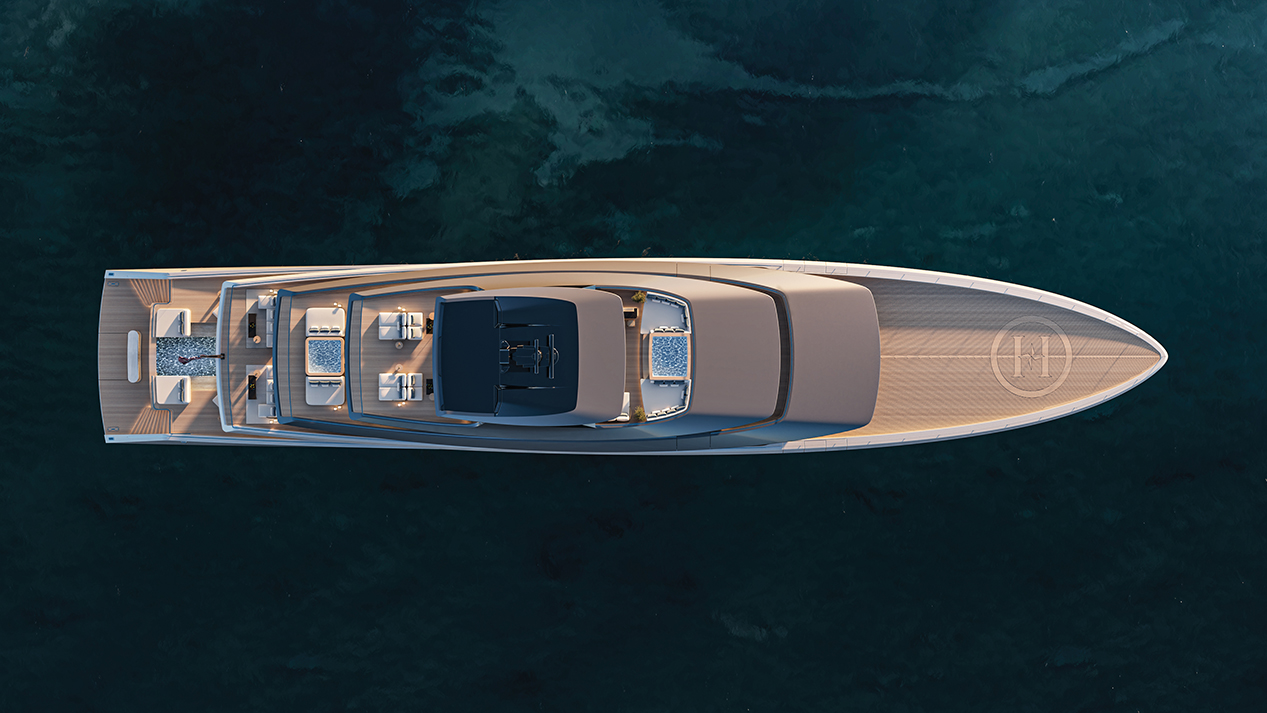
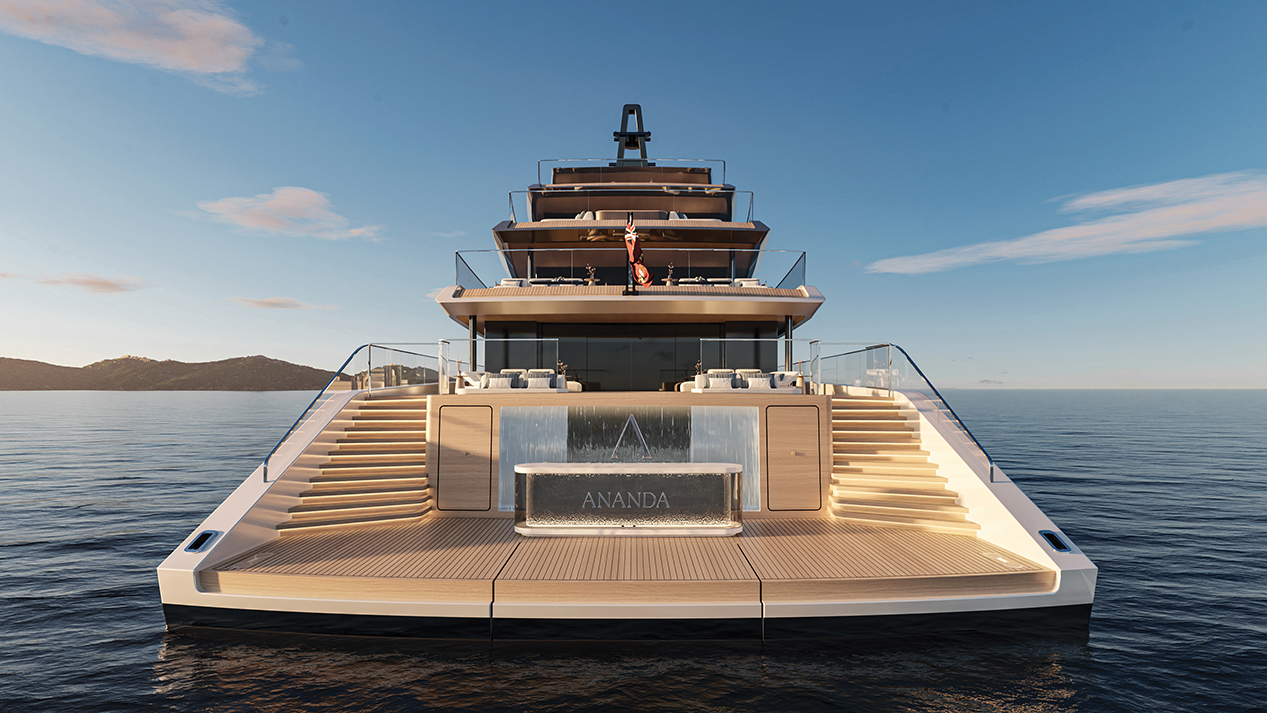
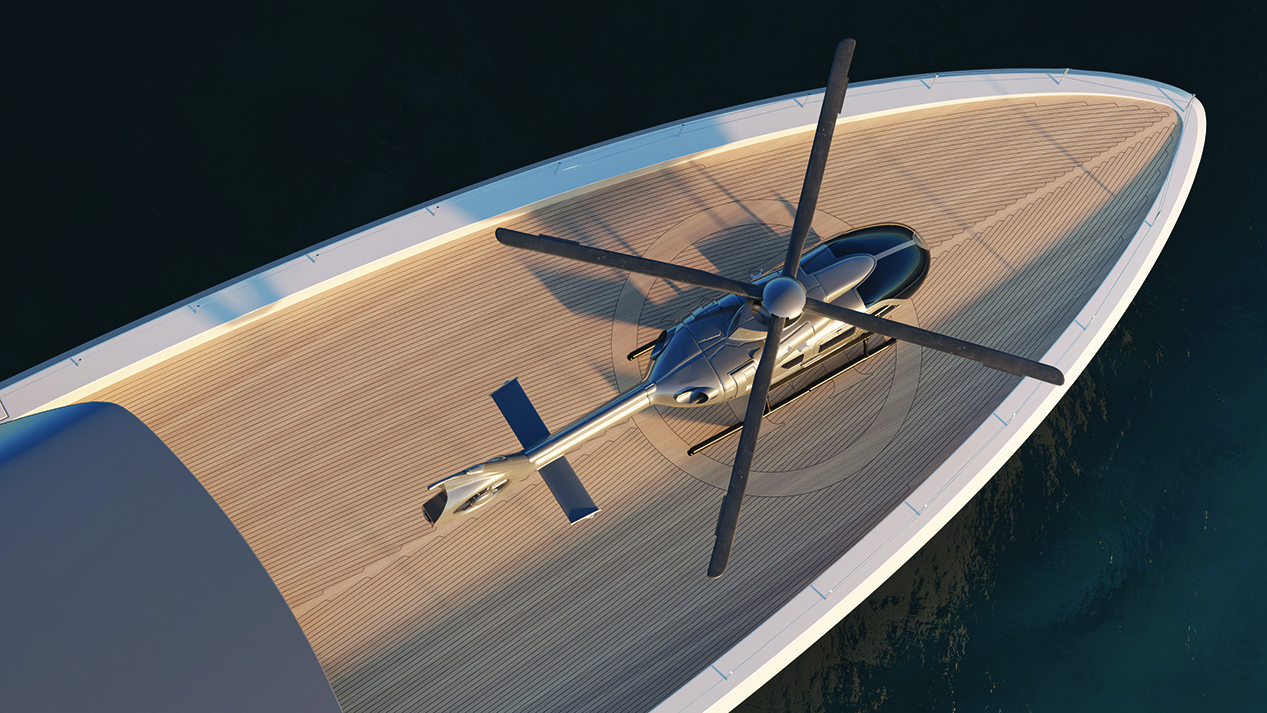
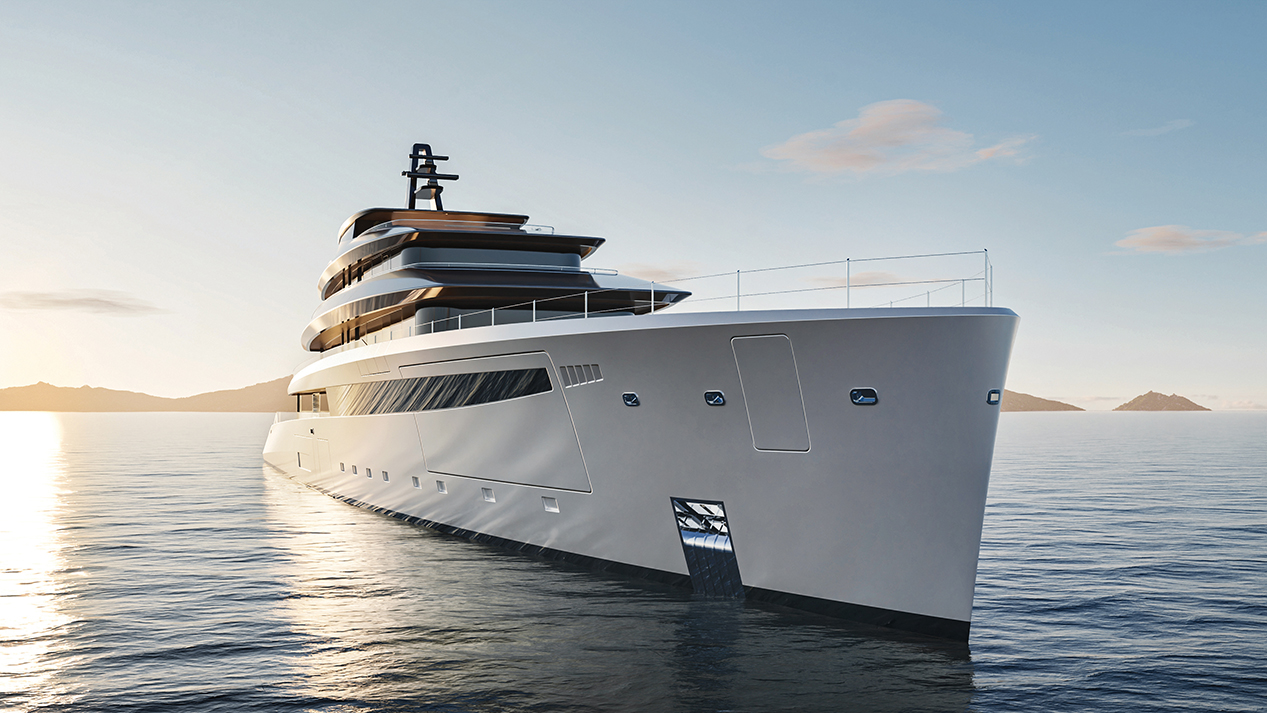
The visible result is a yacht that retains Heesen’s signature sleek profile, but reinterpreted through Sinot’s softer, more organic design language. Bevelled deck edges, a more rounded bow, and a layered superstructure replace the sharp geometries of earlier Heesens. It is unmistakably Dutch in proportion, but it speaks with a calmer, more residential voice.
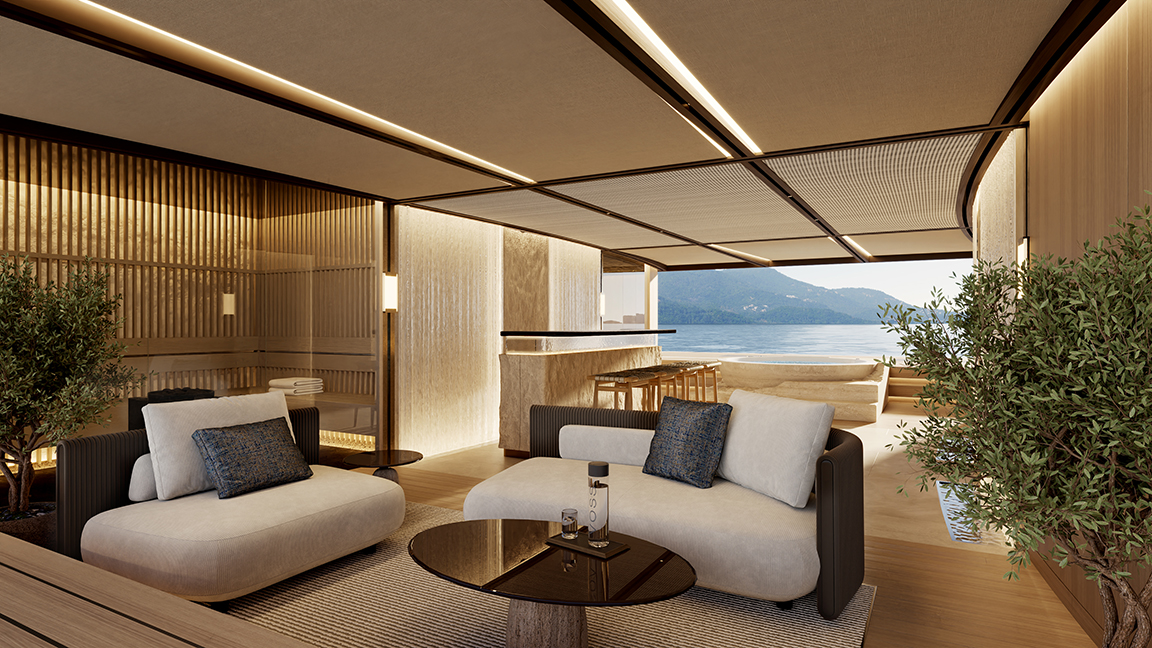
Below decks, the same logic applies. The brief was apartment-like spaces, not stateroom hierarchies. The Owner’s Deck offers two configurable arrangements — a forward-facing private deck with full panoramic sightlines and a built-in office, or an aft-focused deck experience for owners who prefer to live close to the sea. A second master suite on the Bridge Deck mirrors the scale of the primary, deliberately removing traditional hierarchy and opening the yacht for charter use or multi-generational family ownership.
The Engineering: A Hull That Whispers
The numbers tell the story:
- Top speed: 16 knots
- Cruising speed: 12 knots
- Range: 5,000 nautical miles at 12 knots — comfortable transatlantic capability
- Silent cruising: up to four hours on battery alone
- Engines: twin MTU 12V4000 M65L, IMO Tier III compliant, 2×1,920 kW
- Drivetrain: PTI/PTO gearboxes (Power Take-In and Power Take-Off — the mechanical heart of the hybrid system)
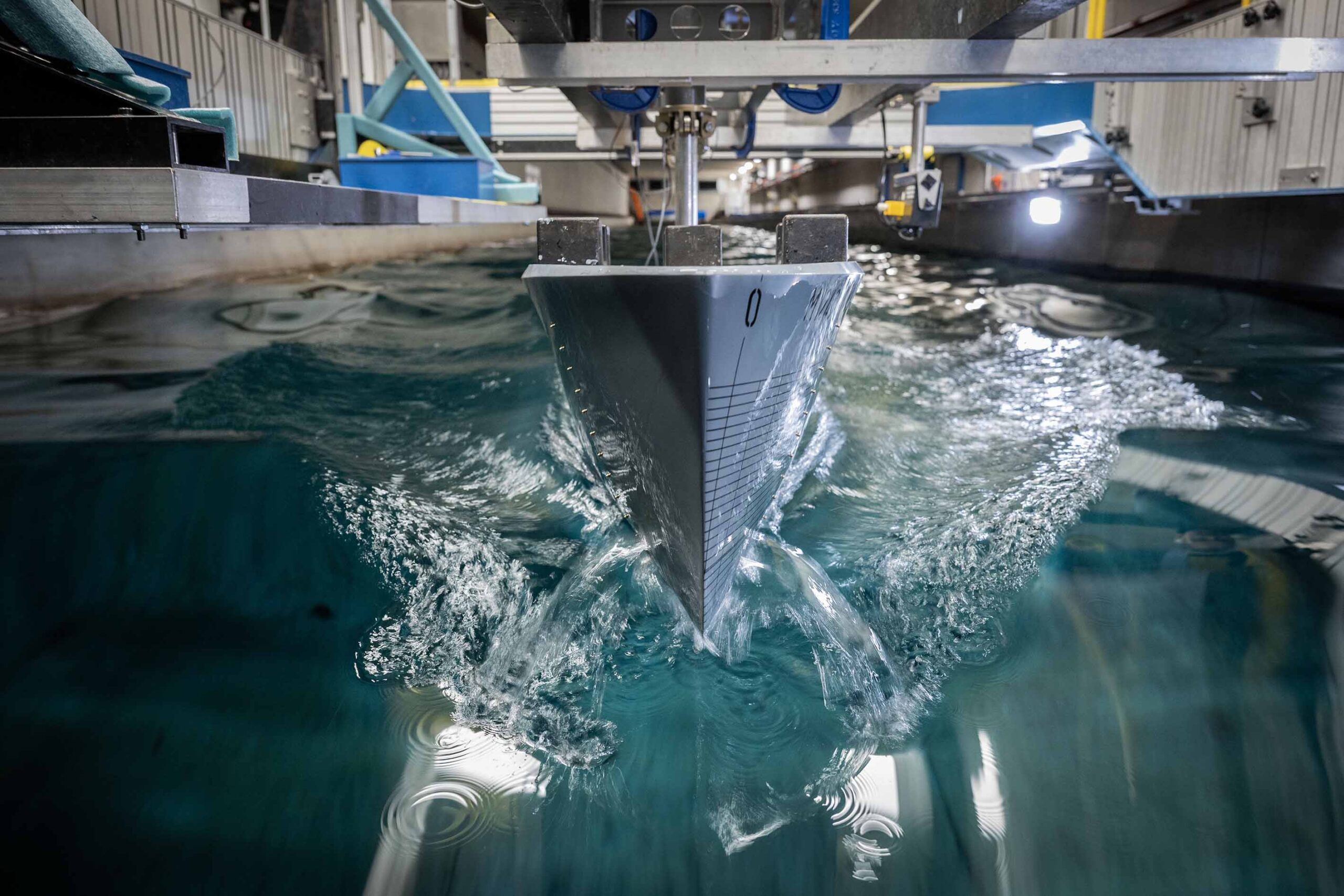
Tank testing at the University of Southampton’s Wolfson Unit, one of the most respected hydrodynamics facilities in Europe, has already validated resistance, trim, heave, and wave-response characteristics. Design, naval architecture, and testing phases are complete — only construction remains.
Four hours of silent, emissions-free cruising is not a marketing line. It is the engineered ability to leave an anchorage at dawn, glide along a coastline at displacement speed, and arrive at the next bay without ever waking the diesels — or the guests sleeping below. For a vessel sold on the promise of inner joy, the absence of noise and vibration is the foundational design choice.

The Arrival: A Glass Elevator, Not a Lobby
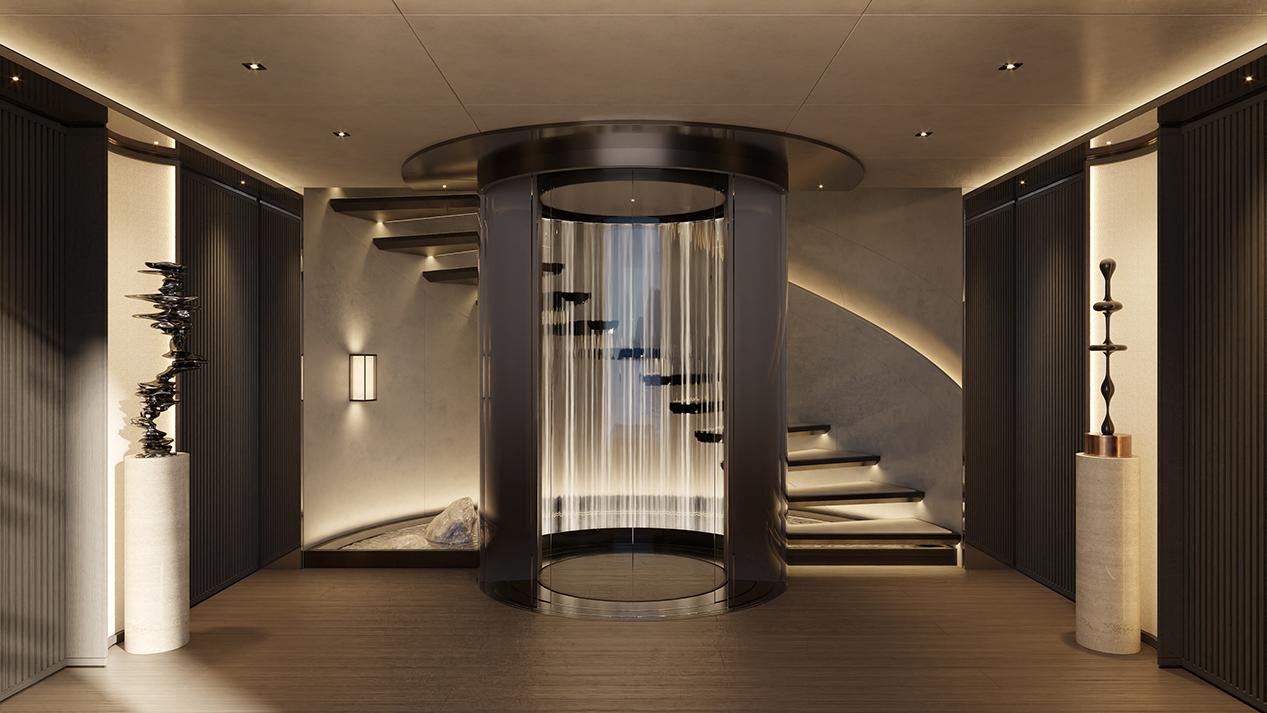
One of the cleverest design decisions on Project Ananda has nothing to do with size or speed. It has to do with how guests come aboard.
A midship shell door opens onto a docking platform, leading directly to a central glass elevator. Guests step from tender to elevator to their suite — bypassing every social area, every public space, every other guest. What is typically a functional operational feature has been redesigned as a ceremonial, intimate arrival. It is the kind of detail that sounds small in writing and feels enormous in person: the difference between arriving as a visitor in a hotel lobby and arriving home through a private entrance.
It is also the design move that most clearly betrays Sinot’s residential thinking. Yachts that feel like homes treat the threshold the way good architects do — as a moment, not a corridor.
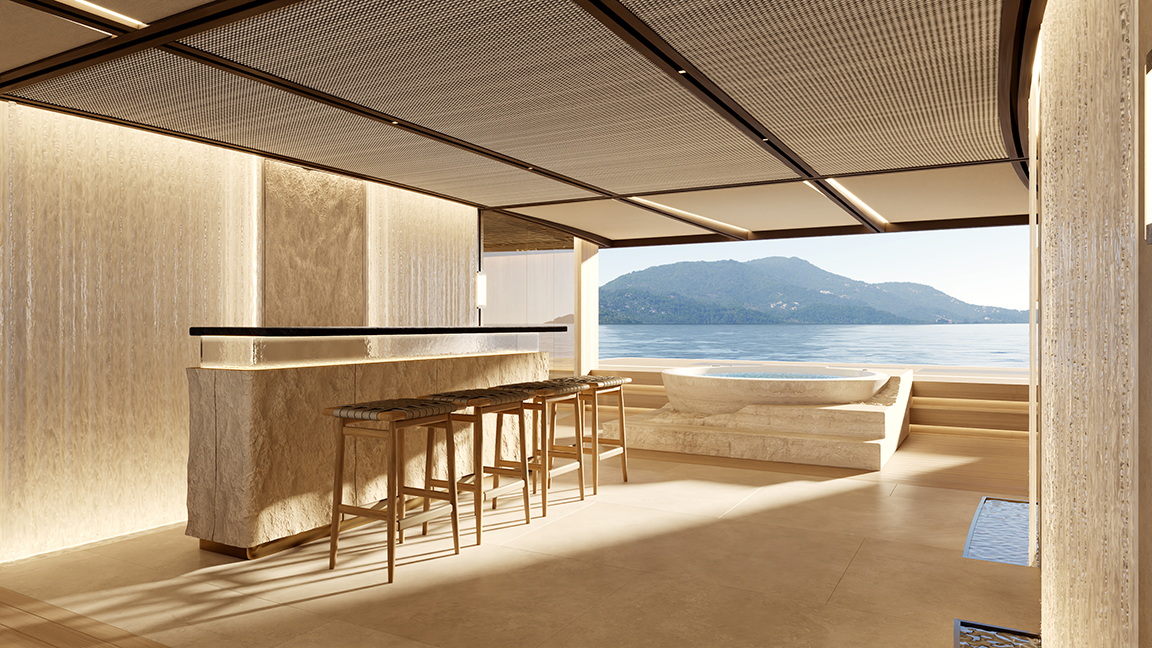
The 100 m² Wellness Suite: Less Spa, More Clinic
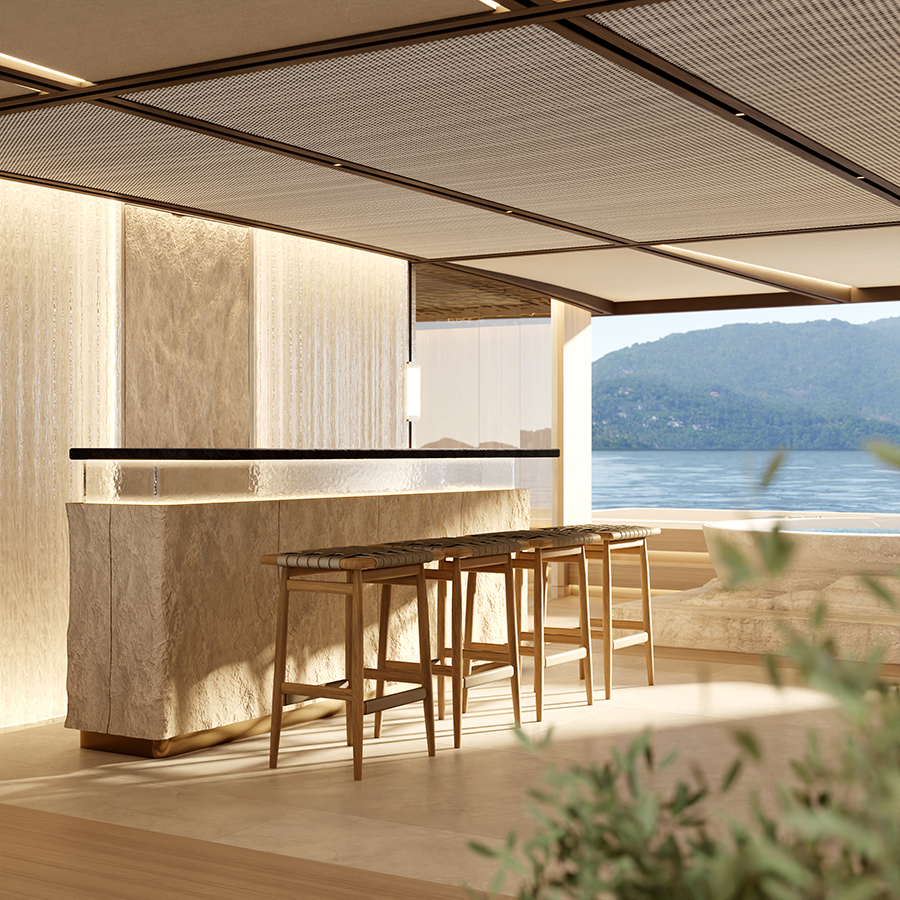
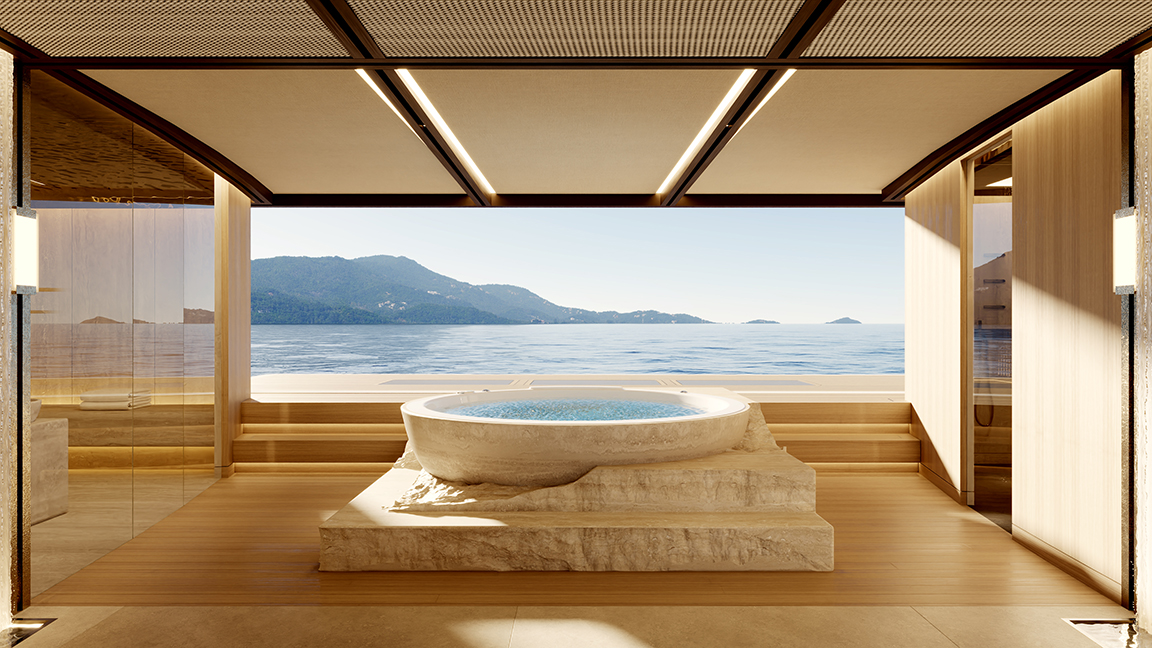
The genuinely category-redefining element of Project Ananda is the midship spa and beach club. At approximately 100 square metres, it is larger than the entire main saloon of many 50-metre yachts — and it is configured less as a leisure amenity and more as a serious wellness facility.
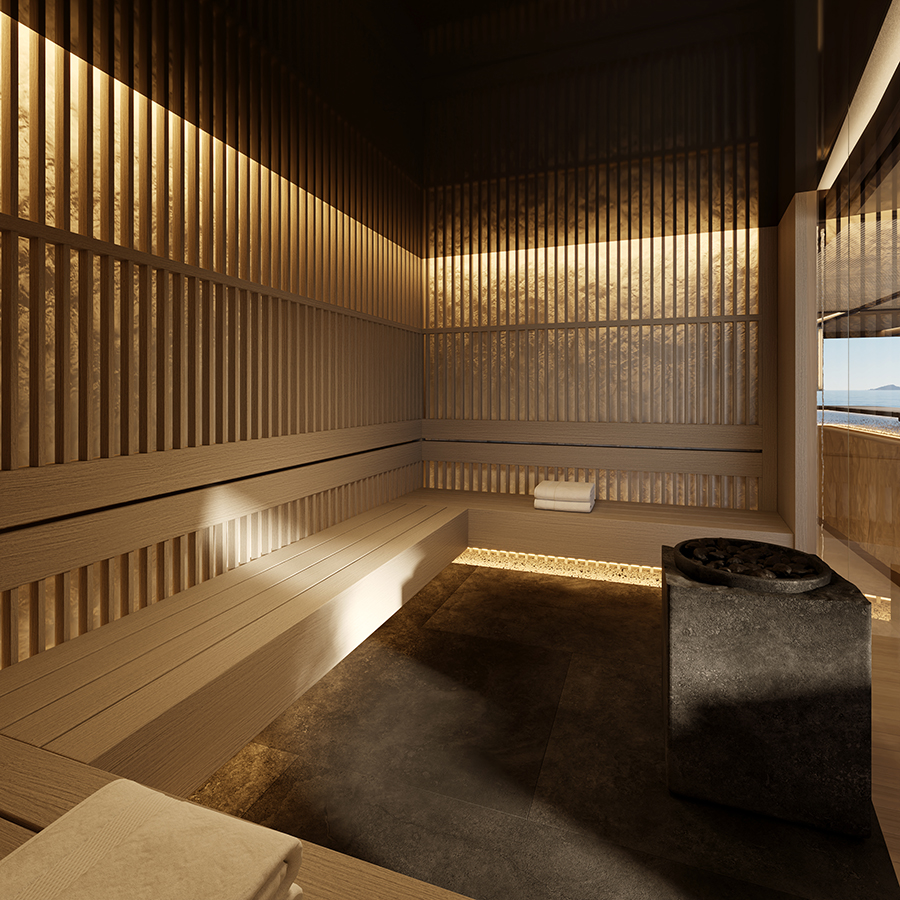
The list is unusual at this scale:
- Sauna and steam room — the foundations
- Ice bath — for contrast therapy and circulatory benefit
- Snow shower — a real one, generating fine snow for after-sauna cooling. This is rare even in five-star spas on land.
- Hyperbaric chamber — for divers, recovery protocols, and increasingly, longevity-oriented owners
- Massage and medical treatment room — the same space, configurable
- Bar — because the post-treatment ritual matters
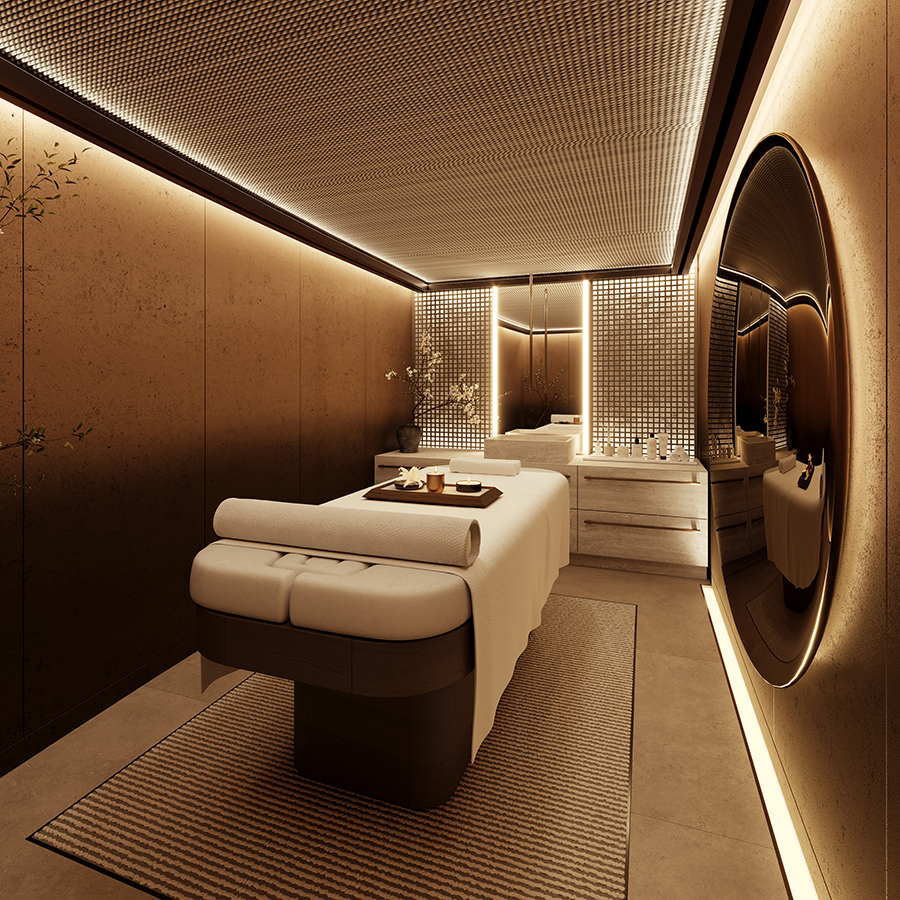
The suite was developed in collaboration with Heesen’s Human Health Engineering department — a unit whose existence inside a Dutch shipyard tells you everything about where the upper segment is moving. Industry observers have noted that this is the first time a yard has explicitly engineered the wellbeing programme alongside the propulsion package. It will not be the last.
The Pool Deck: Travertine, Not Teak
The exterior signals are equally deliberate. Rather than the customary teak decking, Heesen and Sinot have specified travertine flooring — the same warm, stone-toned material that clads the swimming pool — and run it seamlessly from the open-air pool deck into the fully openable indoor main lounge. The aim is true indoor-outdoor living, with a Teppanyaki-style bar at the lounge’s heart and zero visible mooring equipment to interrupt the calm.
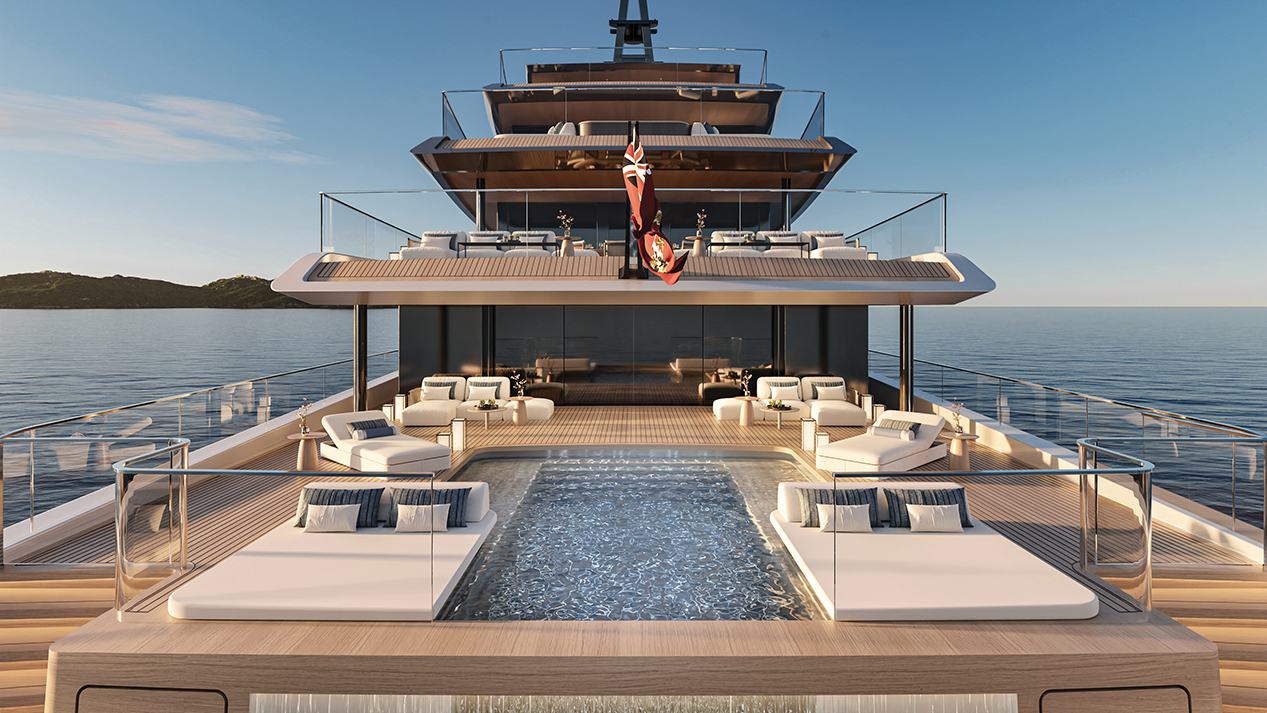
Travertine is heavier than teak. It is harder to engineer. And it tells you, the moment you step on it, that this is a yacht designed by people who think about how a surface feels under bare feet as carefully as how a hull behaves at 14 knots.
Watch the Official Heesen Reveal
Official Heesen Yachts × Sinot Yacht Architecture & Design reveal — Project Ananda. © Heesen Yachts.

In-House From Steel to Stitching
One detail that rarely receives the attention it deserves: every interior fitting on Project Ananda will be crafted by Heesen Interiors at the dedicated facility in Winterswijk. While most European yards subcontract interior outfitting to Italian ateliers or specialist joinery firms, Heesen continues to keep naval architecture, steel fabrication, and luxury interior construction under one ownership umbrella.
The quality-assurance implications are obvious. The resale-value implications are less obvious and more interesting. Yachts whose builders can stand behind the entire build — not just the hull — historically hold value better at the 15-year mark, which is the horizon every UHNW buyer is implicitly thinking about when they sign.
Project Ananda — Full Specifications
| Specification | Detail |
|---|---|
| Project name | Project Ananda (YN 21872) |
| Builder | Heesen Yachts, Oss, Netherlands |
| Length Over All | 72.3 metres (237 ft) |
| Gross Tonnage | ~1,750 GT |
| Decks | Five — Lower, Main, Owner’s, Bridge, Sun |
| Hull | Ultra-fuel-efficient steel |
| Exterior & Interior Design | Sinot Yacht Architecture & Design |
| Interior Construction | Heesen Interiors, Winterswijk |
| Propulsion | Hybrid — twin MTU 12V4000 M65L IMO Tier III (2×1,920 kW) |
| Drivetrain | PTI/PTO gearboxes |
| Top speed | 16 knots |
| Cruising speed | 12 knots |
| Range | 5,000 nm at 12 knots |
| Silent cruising | Up to 4 hours |
| Wellness suite | ~100 m² — sauna, steam, ice bath, snow shower, hyperbaric chamber, treatment room, bar |
| Tank testing | Wolfson Unit, University of Southampton |
| Platform | Smart Custom (speculative build) |
| Keel laying | November 2026 |
| Delivery | 2030 |
| Estimated value | US $150–190 million |
Why Project Ananda Matters Beyond Heesen
For the past decade, the dominant grammar of the 70-metre superyacht has been outward-facing — beach clubs, fold-out terraces, alfresco gathering. Project Ananda is the first major build to argue, in steel and travertine and engineered silence, that the next decade belongs to inward-facing wellbeing. Not less hospitality. Different hospitality. Hospitality measured in sleep quality, recovery time, and the absence of vibration rather than in seating capacity.
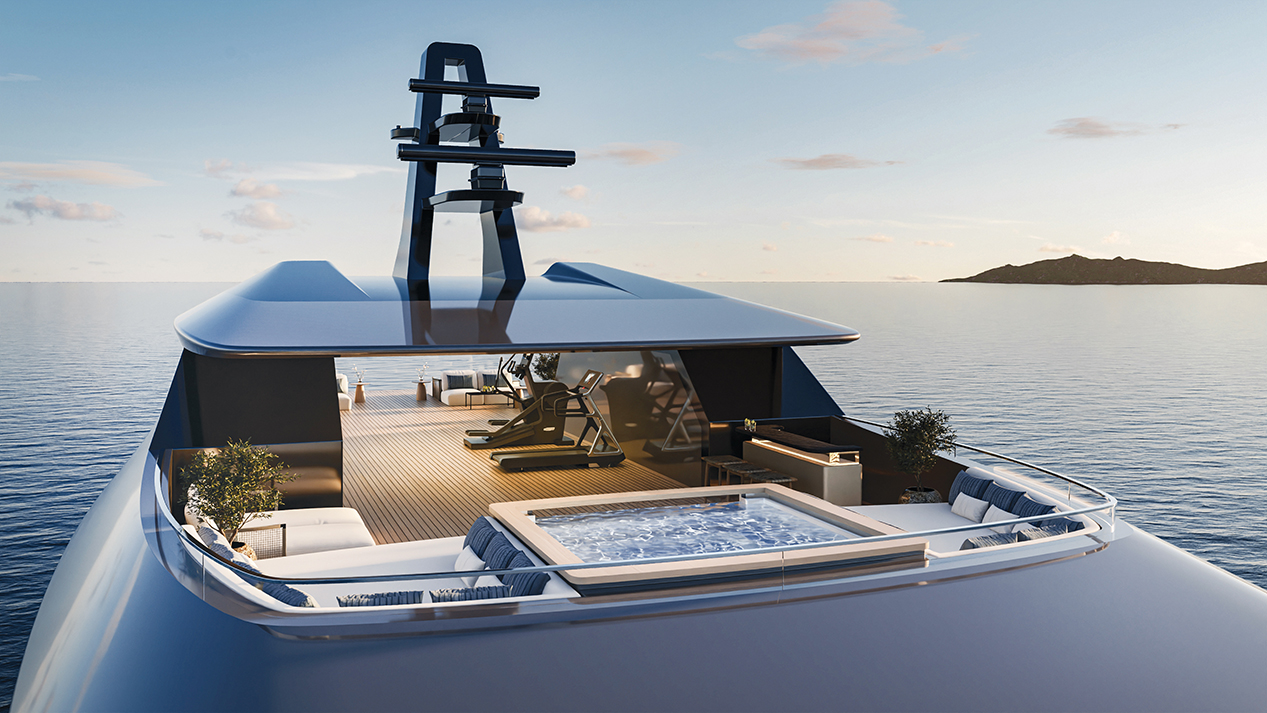
The market signal is what makes this a story beyond the yacht itself: Heesen is committing capital to build this on speculation, at a size the yard has never built before, under a new strategic platform. They are doing it because they believe the buyers are there. BOAT International‘s order-book intelligence supports the bet — wellness-led briefs have moved from outlier to mainstream across the 60–80m segment in 24 months.
And the name fits. Ananda. Inner joy. It is the right yacht, by the right yard, with the right collaborator, at the right moment.
Further Reading on Elysium987
- Elysium987 Luxury Yachts — Editorial Hub
- Wellness & Longevity Editorial
- Monaco Yacht Show
- Dutch Pedigree: Why Northern European Yards Still Win on Quality
- UHNW Living: The Elysium987 Membership
Authoritative Sources
- Heesen Yachts — Official Site
- Sinot Yacht Architecture & Design
- MTU Solutions (Rolls-Royce Power Systems)
- Wolfson Unit — University of Southampton
- BOAT International
- SuperYacht Time
About Elysium987 — Elysium987 is a luxury lifestyle editorial and ecosystem covering the rarest objects, properties, and experiences in the world: from Heesen and Feadship superyachts to Sinot-style Zen residences, F1 Paddock Club seasons, and members-only UHNW concierge. Our coverage is editorially independent and based, where possible, on first-party press materials and direct conversations with yards, designers, and principals.
Renderings: © Heesen Yachts / Sinot Yacht Architecture & Design. Used with permission.
Published: 4 June 2026 | Reading time: ~8 minutes