Elysium
The Ferrari 849 Testarossa returns as Maranello’s new flagship, replacing the SF90 Stradale and pushing road-car tech closer to racing than ever. With a re-engineered 830 cv twin-turbo V8 paired to three electric motors for a system total of 1,050 cv, it’s the most powerful series-production Ferrari to date. Its new control brain, FIVE, builds a real-time digital twin to sharpen braking, traction, and torque vectoring. Add a twin-tail aero concept, an active rear spoiler, and a redesigned underbody, and you have a berlinetta that’s both faster and easier to live with day to day.
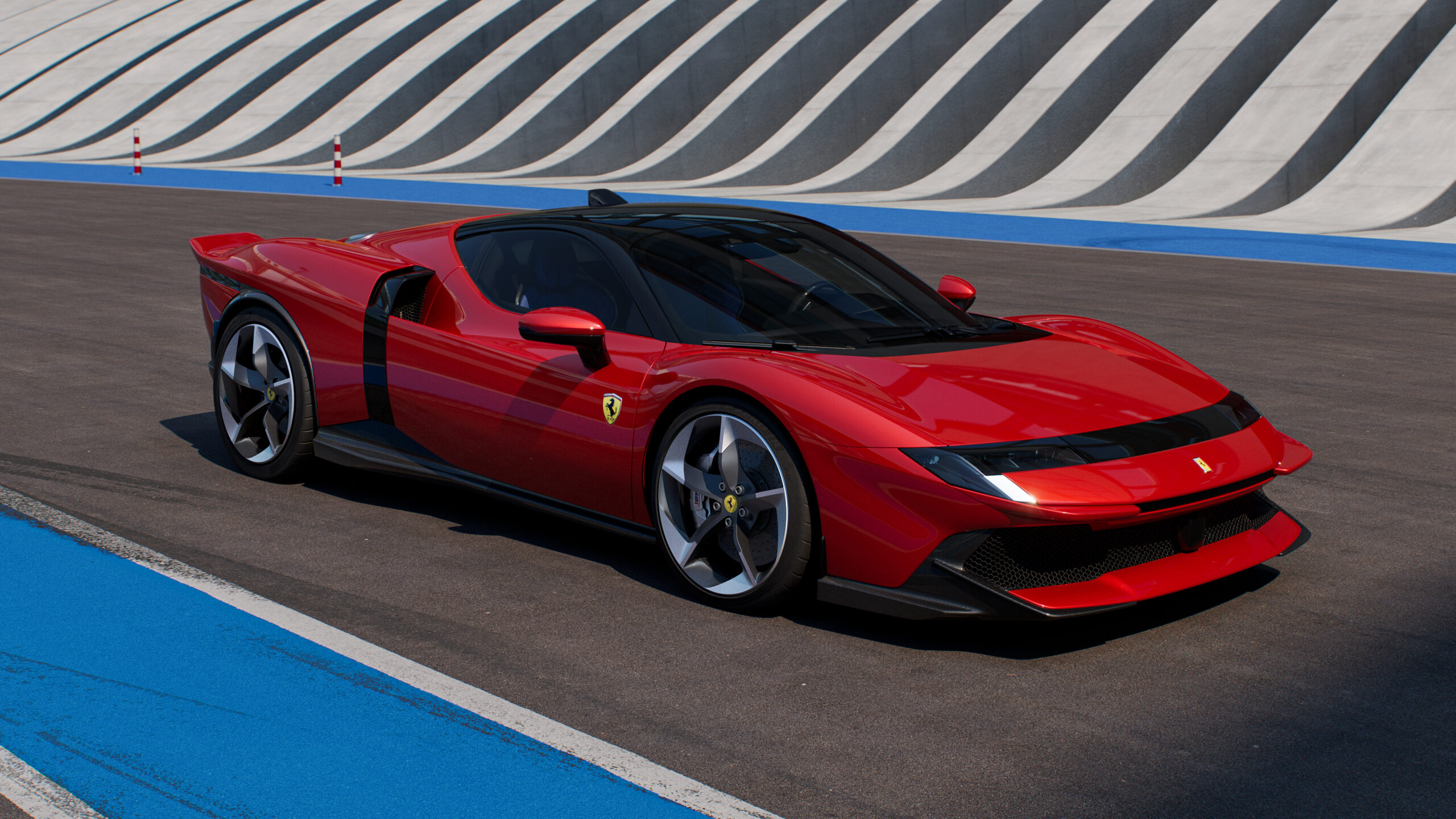
Overview & Heritage: Why Testarossa Matters Again
Ferrari revived the Testarossa name to honor a 70-year thread of icons—from 1950s race cars with red cam covers to the 1984 road-going legend. The new Ferrari 849 Testarossa keeps that spirit for a hybrid era: mid-rear V8, instant e-assist, and headline numbers that eclipse its predecessor. It thrills without ditching comfort, thanks to improved HMI, ADAS, and a seven-year maintenance program.
A Flagship Reborn: From SF90 to Testarossa
Positioned at the top of the lineup, it delivers 50 CV more than the SF90 with no weight penalty, thanks to extensive light-weighting across the engine and chassis. The result is Ferrari’s best power-to-weight ratio for a range model.
Name, Legacy, and the “Red Head” Story
“Testa rossa” originally described red-painted cam covers on Ferrari’s fiercest engines. Today it signals a flagship that blends racing tech with grand-touring polish—heritage refreshed for the plug-in age.
Powertrain Deep Dive
Revised 830 cv V8 (F154FC)
The 3,990 cc twin-turbo V8 gains the largest turbo ever on a Ferrari production car, low-friction bearings, and upgraded heads, manifolds, and fueling. Output rises to 830 cv with a specific 208 cv/l. An optimized intercooler and Inconel exhaust improve thermal efficiency while preserving Ferrari’s signature sound.
Three E-Motors and 7.45 kWh Battery
A rear MGU-K plus two front-axle motors add up to 220 cv of electric power, enabling e-AWD and torque vectoring. The 7.45 kWh battery supports up to 25 km of eDrive. Calibration smooths transitions between electric and combustion phases, and revised cooling maps ensure consistent performance during demanding use.
eManettino Modes
Choose from eDrive (electric only), Hybrid (efficiency), Performance (keeps systems primed), or Qualify (maximum output for peak laptimes).
Headline Performance & Lap Times
Top speed exceeds 330 km/h. 0–100 km/h takes under 2.3 s; 0–200 km/h is 6.35 s. Stopping distances are 28.5 m from 100 km/h and 108 m from 200 km/h. At Fiorano, the car laps in 1’17”500—nudging into track-special territory while remaining a series-production model.

Chassis, Dynamics & Control Logic
ABS Evo and FIVE Explained
FIVE (Ferrari Integrated Vehicle Estimator) creates a real-time model of the car’s behavior, estimating speed and yaw with high precision. That data feeds traction control, the electronic differential, e-4WD delivery, and ABS Evo, so the car brakes later, meters torque more accurately, and stays predictable as grip changes.
Suspension, Damping, and Power-to-Weight
Revised spring and damper settings, trimmed unsprung mass, and lighter road springs (about 35% reduction) improve lateral performance by ~3% versus SF90 and reduce roll gradient by ~10%, while preserving ride quality.


Aerodynamics & Thermal Management
Twin-Tail Concept, Active Spoiler, Underbody Vortex Generators
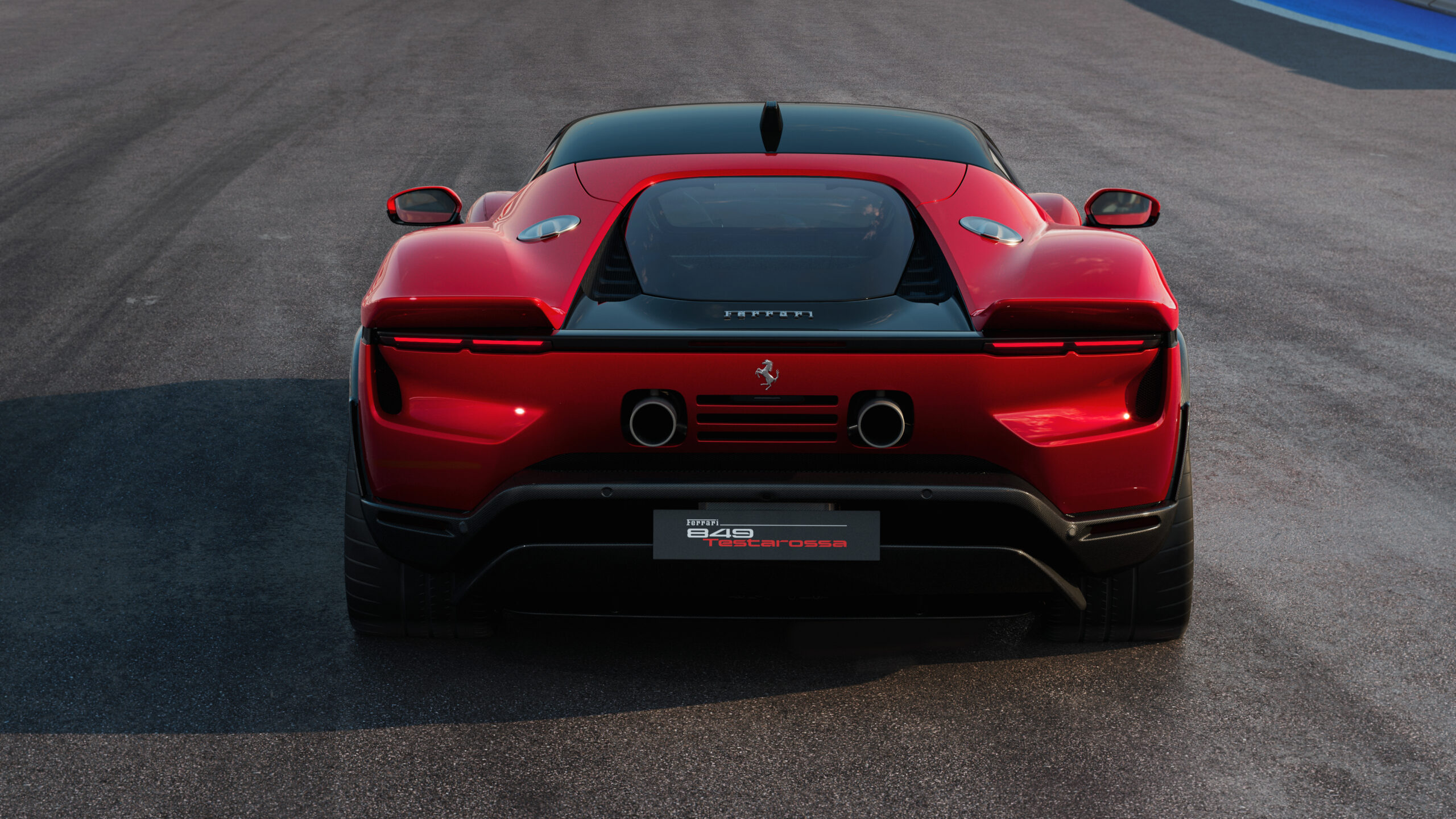
A twin-tail rear works with an active spoiler that switches between Low Drag and High Downforce in under a second. Cascading vortex generators on the front underbody and a larger splitter increase front load. Total downforce is 415 kg at 250 km/h, 25 kg more than SF90.
Cooling Upgrades and Brake Ventilation
Redesigned radiators (with asymmetric geometry), enlarged front intakes, and refined ducting raise thermal capacity by about 15%. Front and rear brake cooling are improved for consistency on track.
Sound & Shift Strategy
The flat-plane V8 is tuned for a fuller, cleaner timbre across the rev range. Shift logic inspired by the SF90 XX Stradale adds a crisper, more exciting signature during upshifts in press-on driving—especially in Race mode—without artificial theatrics.
Wheels, Tyres & Brakes
Co-Developed Tyre Options
Tyres were co-engineered with Michelin, Pirelli, and Bridgestone, including track-leaning Cup 2 R, Cup 2 for Assetto Fiorano, and street-focused P Zero R and Potenza Sport. Sizes are 265/35 R20 front and 325/30 R20 rear.

Carbon-Ceramic Hardware & Stopping
New front ventilation channels and stiffer rear calipers pair with carbon-ceramic discs to deliver short, repeatable braking distances—even after heat-soaked lapping.
Design & HMI
Exterior: 70s Prototypes Meet 80s Cues
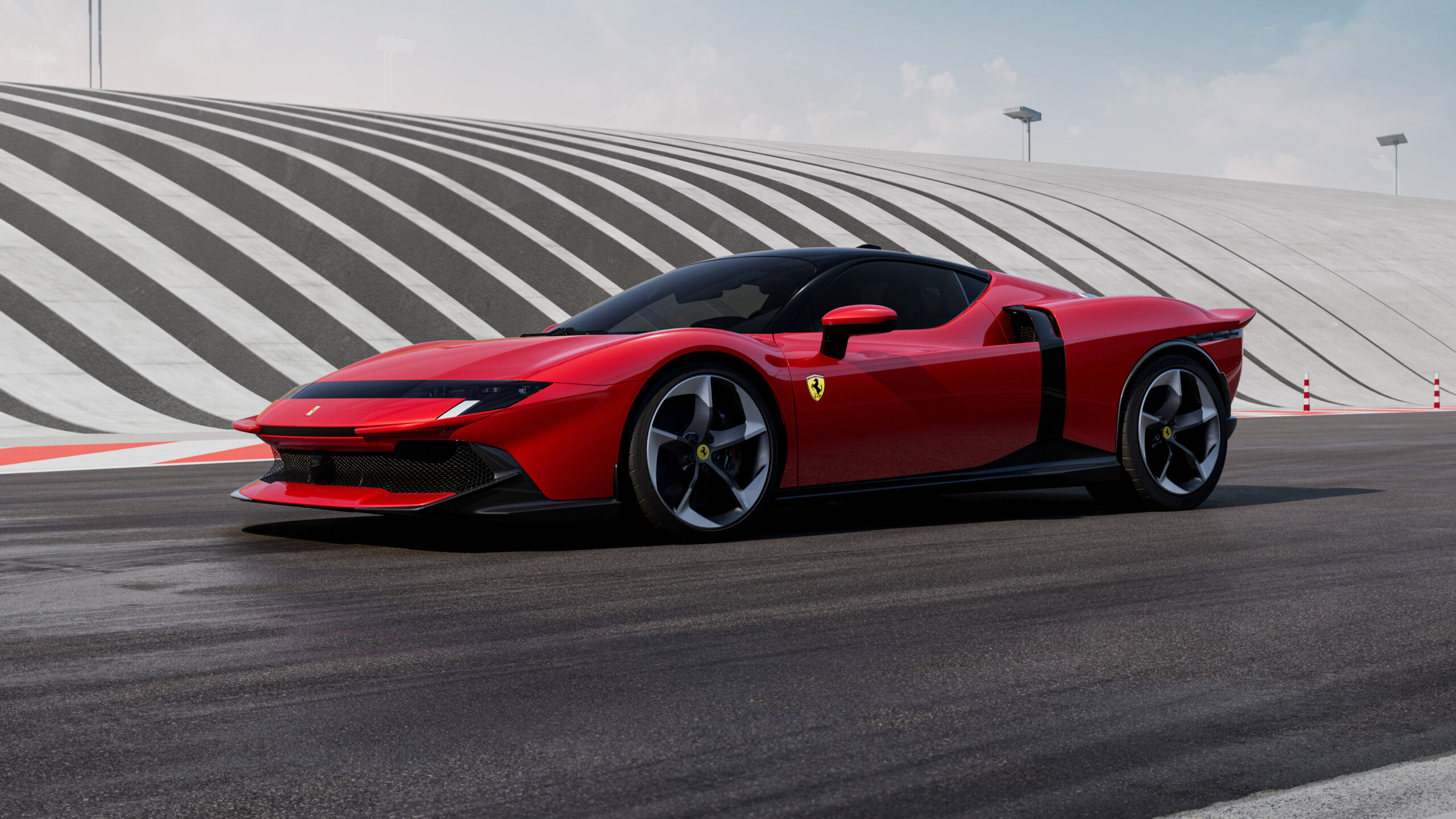
Crisp, geometric lines meet functional ducting. The door doubles as an aero conduit. The squarer front bumper and full-width theme nod to classic Ferrari shapes while serving airflow and cooling. The twin-tail rear and lighter, faster-acting active wing underscore the car’s performance stance.
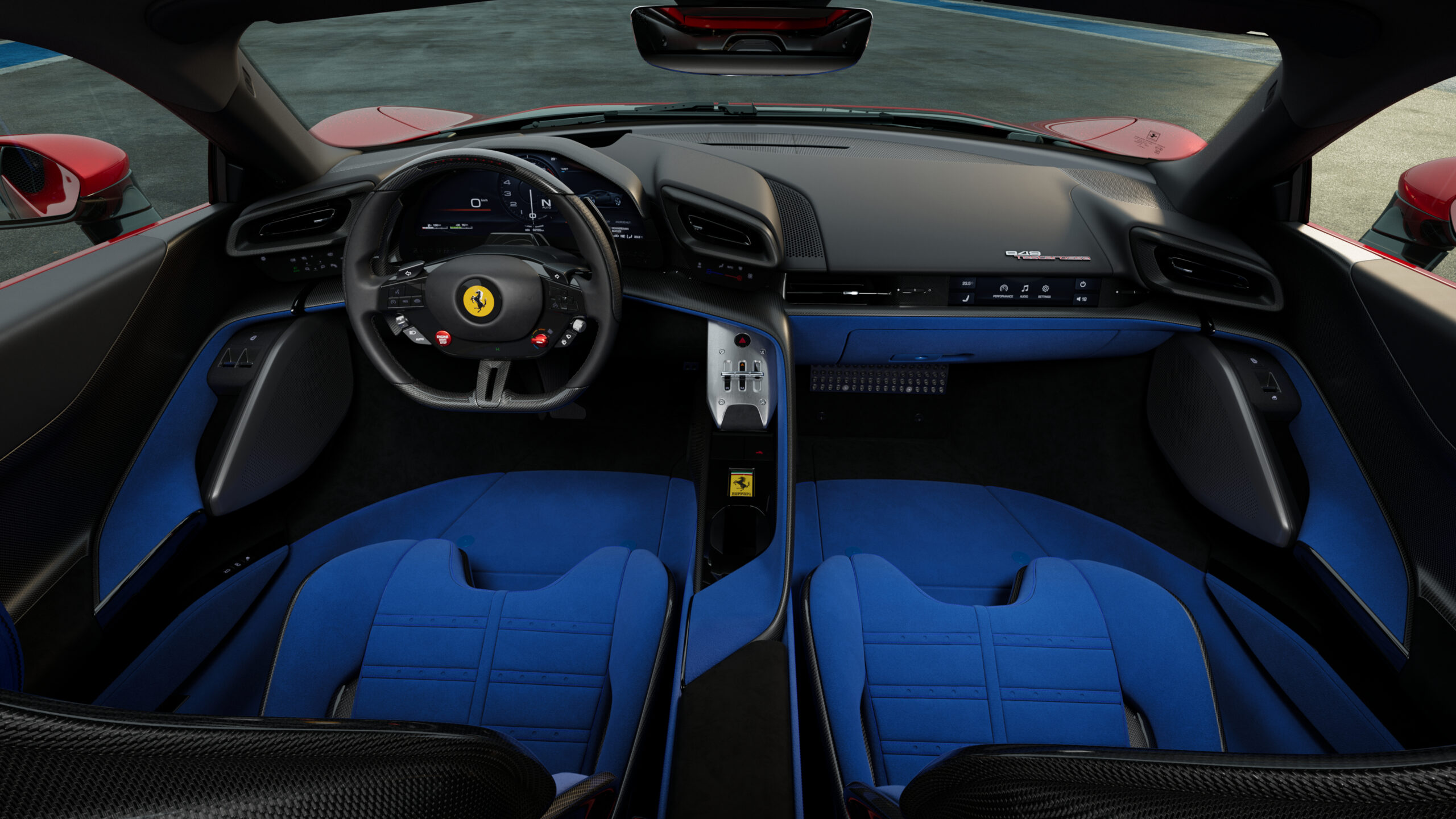
Interior: Central Sail, New Steering Wheel, Intuitive Displays
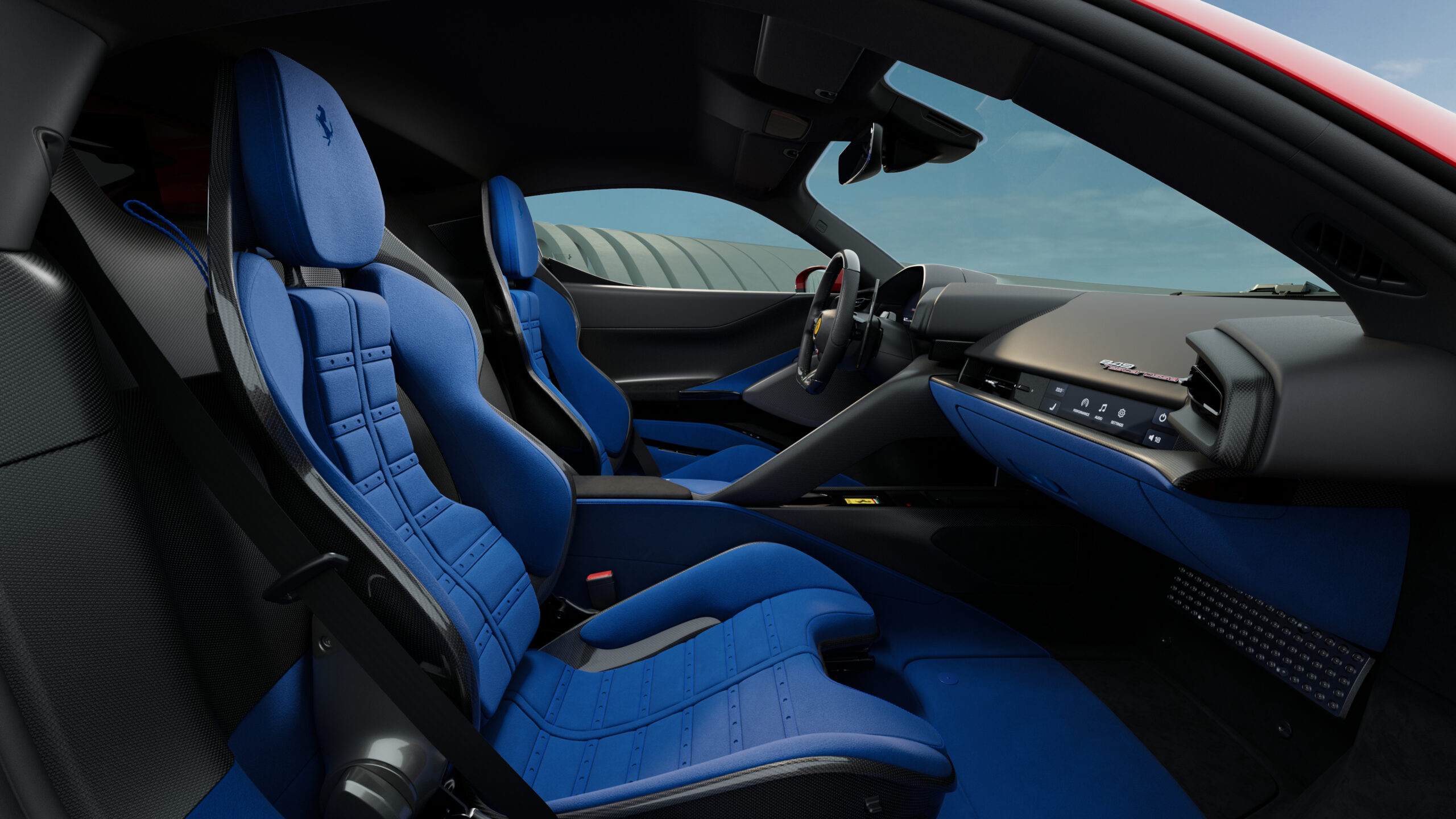
A “central sail” reorganizes primary controls. The new steering wheel returns tactile, mechanical buttons (including the iconic start). Passenger display, wireless charging, Apple CarPlay and Android Auto, plus MyFerrari Connect make the cabin modern and intuitive.
ADAS & Everyday Usability
Adaptive Cruise Control with Stop & Go, Automatic Emergency Braking with cyclist detection, Blind-Spot Detection, Lane Departure Warning and Lane Keeping Assist, Automatic High Beam, Traffic Sign Recognition, Surround View, and driver-attention monitoring step in only when needed—boosting comfort and confidence without dulling engagement.
Assetto Fiorano Package
Assetto Fiorano cuts roughly 30 kg via carbon and titanium, adds track-bred Multimatic dampers, larger front flicks, and extra underfloor generators, and can triple rear downforce using twin wings in place of the twin tails with minimal drag penalty. Cup 2 tyres and a front lifter are available; Magneride can be retained when you select the lifter.
Sustainability & Materials
Ferrari uses recycled secondary-alloy aluminum for key engine castings (head, crankcase, sump), reducing CO₂ per kilogram of aluminum by up to about 80% and cutting the footprint by as much as 0.4 t CO₂e per car—meaningful progress for a super-sports flagship.
Personalisation Highlights
Two launch paints—Rosso Fiammante and Giallo Ambra—headline a wide palette. A new Giallo Siena Alcantara interior trim complements Giallo Ambra. Forged wheel designs feature functional aero profiles that help extract air from the wells and tidy wake.
Ownership: 7-Year Maintenance & Hybrid Warranties
Seven-year scheduled maintenance is standard across the range. Hybrid components carry a five-year warranty, with optional factory extensions. Under the Warranty Extension Hybrid program, extending to year eight includes an HV battery replacement at no extra cost. The Power Hybrid program covers major powertrain components from year 8 to year 16 and consists of another HV battery replacement at that milestone.
Ferrari 849 Testarossa: Full Technical Specifications
• Powertrain: PHEV twin-turbo V8 plus three electric motors
• System Output: 1,050 cv
• ICE Output: 830 cv @ 7,500 rpm; 842 Nm @ 6,500 rpm
• Battery: 7.45 kWh lithium-ion; up to 25 km eDrive range
• Drivetrain: e-AWD with front-axle torque vectoring plus rear MGU-K
• 0–100 km/h: < 2.3 s
• 0–200 km/h: 6.35 s
• Top Speed: > 330 km/h
• Braking 100–0 / 200–0: 28.5 m / 108.0 m
• Fiorano Lap: 1’17”500
• Dimensions (L/W/H): 4,718 / 2,304 / 1,225 mm
• Wheelbase: 2,650 mm
• Dry Weight: 1,570 kg
• Tyres (F/R): 265/35 R20; 325/30 R20
• Brakes (F/R): 410×223×38 mm; 372×233×34 mm
• Transmission: 8-speed dual-clutch F1
• Downforce: 415 kg @ 250 km/h
• ADAS Highlights: ACC Stop & Go, AEB w/ cyclist detection, BSM, LKA, TSR, Surround View

Buying Advice: Who Should Choose It
Choose the Ferrari 849 Testarossa if you want hypercar-level pace without giving up comfort, tech, and daily usability. Compared with SF90, you get more power, sharper control logic, stronger cooling, and a cleaner driver interface. Track-leaning buyers should consider Assetto Fiorano. City drivers will appreciate eDrive mode and the optional front lifter.
FAQs
Is it faster than the SF90 Stradale?
Yes. System power rises by 50 cv to 1,050 cv, with quicker acceleration and a 1’17”500 Fiorano lap.
What is FIVE and why does it matter?
FIVE is a real-time estimator (a digital twin) of vehicle dynamics. It feeds traction, e-diff, e-4WD, and ABS Evo, enabling later braking and more precise corner exits.
How far can it drive on electricity only?
Up to about 25 km on a full charge, thanks to the 7.45 kWh battery.
What are the main aerodynamic gains?
The twin-tail rear with a faster, lighter active spoiler, a redesigned front underbody with cascading vortex generators, and a larger splitter. Combined, they deliver 415 kg at 250 km/h.
When does it arrive and how much does it cost?
Allocations, pricing, and delivery timing vary by market and specification. Contact your authorized Ferrari dealer for current details.
Which tyres should I choose?
For track days, consider Cup 2 R or Cup 2 with Assetto Fiorano. For mixed street performance, P Zero R or Potenza Sport are excellent all-rounders.
How do maintenance and warranty work?
Seven-year scheduled maintenance is standard. Hybrid components are covered for five years, with optional factory-backed extensions that can include HV battery replacement at predetermined milestones.
Is there anything sustainable about it?
Ferrari uses recycled aluminum secondary alloys in engine castings, cutting CO₂ intensity per kilogram by up to about 80%.
Helpful External Resource
Learn how to structure content that search engines understand:
https://developers.google.com/search/docs
The New Benchmark
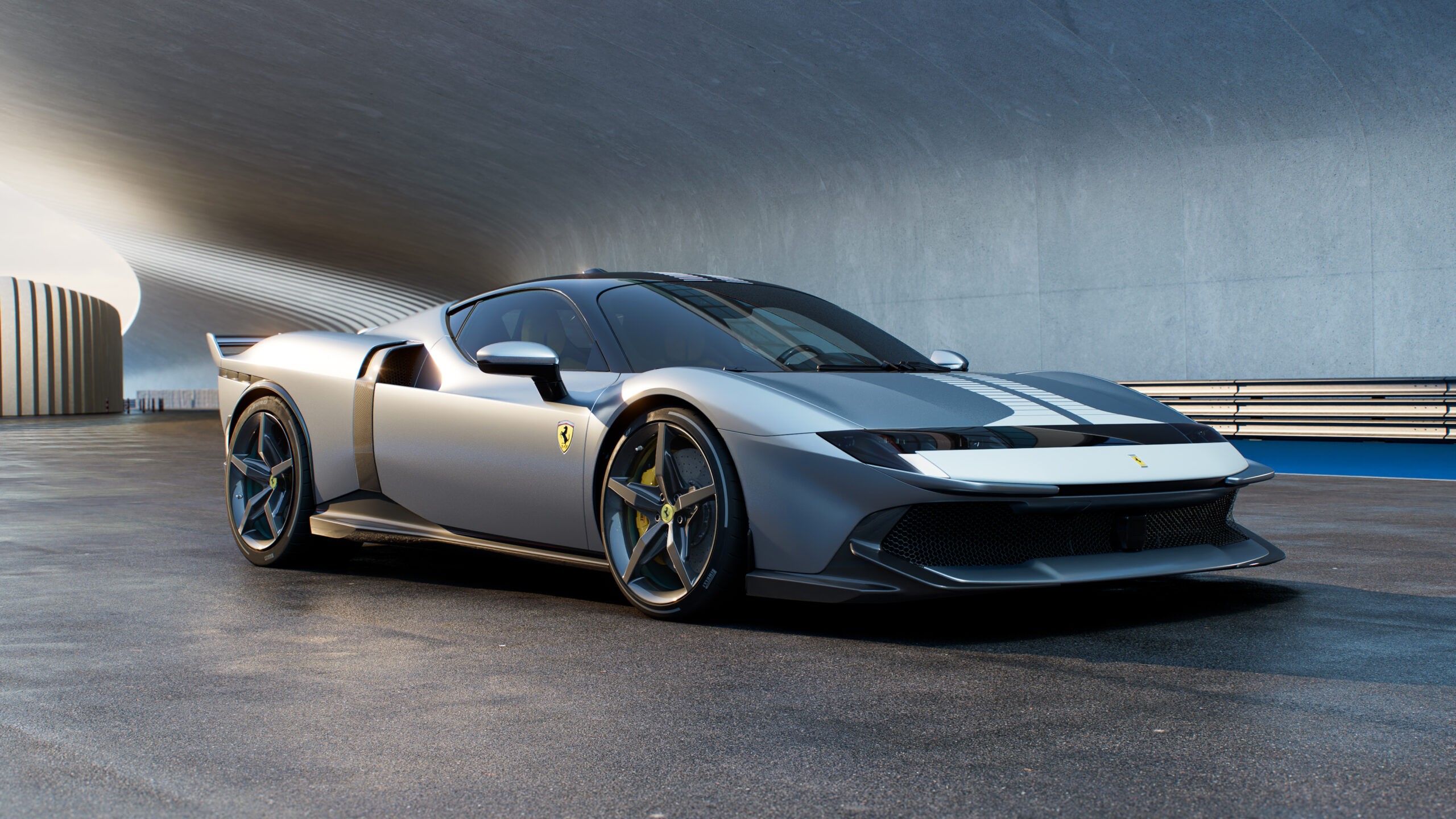
The Ferrari 849 Testarossa isn’t a nostalgia play; it’s a ground-up rethink of a flagship Ferrari for 2025 and beyond. The powertrain is both brutally effective and refined, the control systems are tightly integrated, and the aerodynamics and thermal management systems demonstrate race-car intent. Whether you’re carving a favorite road, hot-lapping on Cup rubber, or gliding home silently on eDrive, this is the most complete hybrid super-berlinetta Ferrari has built so far—and a worthy bearer of the Testarossa name.
Ferrari 849 Testarossa · Hybrid Flagship, Simplified
Re‑engineered 830 cv V8 + three e‑motors (system 1,050 cv). FIVE control logic. Real aero. Daily‑usable hybrid finesse.
Overview & Heritage
Testarossa returns as a modern hybrid berlinetta: mid‑rear V8, instant e‑assist, and polished day‑to‑day tech (HMI, ADAS, 7‑year maintenance).
Powertrain
V8 (F154FC): 3,990 cc twin‑turbo, larger turbos, low‑friction bearings, upgraded heads/manifolds/fueling, optimized intercooler, Inconel exhaust.
Hybrid system: rear MGU‑K + two front e‑motors, e‑AWD with torque vectoring, 7.45 kWh battery, up to ~25 km eDrive.
Modes: eDrive / Hybrid / Performance / Qualify.
Headline Performance
- 0–200: 6.35 s
- Top speed: > 330 km/h> 205 mph
- Braking 200→0: 108 m≈ 354 ft
- Fiorano lap: 1’17”500
Chassis, Dynamics & FIVE
FIVE: real‑time digital twin feeds ABS Evo, e‑diff, traction, and e‑4WD. Later braking, tidier exits.
Suspension: lighter springs (~35%), roll gradient ~‑10%, ~+3% lateral performance vs SF90.
Aerodynamics & Thermal
Twin‑tail rear + faster active spoiler; larger splitter; cascading vortex generators. Downforce: 415 kg @ 250≈ 915 lb @ 155 mph.
Cooling capacity ~+15% via radiators/intakes/ducting; improved brake ventilation.
Design & HMI
Exterior: Functional geometry with classic cues. Door as aero conduit; square front bumper; twin‑tail stance.
Interior: Central sail layout; mechanical buttons on wheel; passenger display; wireless charging; Apple CarPlay/Android Auto; MyFerrari Connect.
ADAS: ACC S&G, AEB (cyclists), BSM, LKA, Auto High Beam, TSR, Surround View.
Wheels, Tyres & Brakes
- Tyres: Cup 2 R / Cup 2 / P Zero R / Potenza Sport (265/35 R20; 325/30 R20)
- Carbon‑ceramic brakes; new front channels; stiffer rear calipers.
Assetto Fiorano
~‑30 kg (carbon/titanium), Multimatic dampers, larger front flicks, extra underfloor generators. Optional twin wings can triple rear downforce with minimal drag penalty.
Sustainability
Recycled secondary‑alloy aluminum for engine castings; up to ~‑80% CO₂ intensity per kg; ~‑0.4 t CO₂e per car.
Ownership
- 7‑year scheduled maintenance (range‑wide)
- Hybrid components: 5‑year coverage; factory extensions available
- Warranty Extension Hybrid → year 8 + HV battery replacement
- Power Hybrid → years 8–16 + HV battery replacement
Full Technical Specifications
- Powertrain
- PHEV twin‑turbo V8 + three e‑motors
- System Output
- 1,050 cv (≈ 1,036 hp)
- ICE Output
- 830 cv @ 7,500 rpm; 842 Nm @ 6,500 rpm
- Battery
- 7.45 kWh; ~25 km eDrive
- Drivetrain
- e‑AWD, front torque vectoring, rear MGU‑K
- 0–100
- < 2.3 s
- 0–200
- 6.35 s
- Top Speed
- > 330 km/h> 205 mph
- Braking 100→0
- 28.5 m≈ 93.5 ft
- Braking 200→0
- 108 m≈ 354 ft
- Fiorano Lap
- 1’17”500
- Dimensions
- 4,718 / 2,304 / 1,225 mm
- Wheelbase
- 2,650 mm
- Dry Weight
- 1,570 kg
- Tyres (F/R)
- 265/35 R20; 325/30 R20
- Brakes (F/R)
- 410×223×38 mm; 372×233×34 mm
- Transmission
- 8‑speed dual‑clutch F1
- Downforce
- 415 kg @ 250≈ 915 lb @ 155 mph
- ADAS
- ACC, AEB (cyclists), BSM, LKA, AHB, TSR, Surround View
FAQs
Is it faster than the SF90 Stradale?
Yes—system power rises by 50 cv to 1,050 cv, with quicker acceleration and a 1’17”500 Fiorano lap.
What is FIVE and why does it matter?
FIVE is a real‑time estimator of vehicle dynamics that sharpens braking, traction, and torque vectoring.
How far can it drive on electricity only?
About 25 km on a full charge (7.45 kWh battery).